
The role of lockbox services in healthcare finance automation.
Key takeaways:
- Healthcare organizations can improve productivity and reduce administrative costs by automating paper-based receivables processes with electronic lockbox services, helping address rising costs to collect payment and ongoing staffing challenges.
- Healthcare lockbox solutions accelerate payment processing, improve cash flow, reduce posting errors and strengthen security by converting paper payments and remittances into searchable digital files and automated workflows.
- Lockbox automation serves as a foundation for broader revenue cycle transformation, enabling integrated remittance management, better data accessibility, and scalable operations that support long-term digital initiatives.
The opportunity to generate significant savings sustains interest in automating many of healthcare’s finance and revenue cycle management (RCM) processes. A prime target is receivables, where manual and paper-based workflows remain prevalent.
This report focuses on a practical step that organizations can take to enhance receivables automation and productivity: electronic lockbox services that are tuned for healthcare’s requirements. A quick primer is offered on the current need, the key functions and features of today’s lockbox automation, and the proven substantial benefits to be attained.
The impetus for automation.
The overall landscape.
Improving productivity is an increasingly pressing goal across healthcare. Driving operational efficiency is a daily effort, but is also becoming “a long-term strategic advantage rather than a temporary cost-cutting exercise.”[1] footnote [1]
The potential industry-wide gains are meaningful. Examining a set of high-volume administrative transactions, including several related to payments, the Council for Affordable Quality Healthcare (CAQH) projects that fully automating them would produce savings of almost $19 billion.[2] footnote [2] Another analysis found that organizations have experienced a 45% increase in cost to collect over the past two years, suggesting considerable room for improvement.[3] footnote [3]
Many identifiable opportunities.
Specific automation opportunities exist within healthcare finance’s lingering paper-based and manual processes. Consider the evidence:
- The percentage of claims payments said to be fully electronic in 2025 was 78%, leaving roughly one in five payments processed manually or with partial automation. Electronic adoption is significantly lower for attachments, with just 24% of attachments processed electronically.[4] footnote [4]
- The share of payers that reimburse providers using paper checks is 68%, up from 60% in 2023, and over half of providers send checks to patients for refunds.[5] footnote [5]
- Three or more full-time staff members per physician are needed to assist with administrative and regulatory-related tasks in 40% of outpatient group practices.[6] footnote [6]
- Despite steep declines in recent years, checks accounted for 3% of consumer payments in 2024.[7] footnote [7] That level represents significant volume.
Other drivers.
Cost reduction is a primary, but not exclusive, rationale for automating manual payment processes. Two additional factors fueling the trend are urgent demands to strengthen transaction security and providers’ need to optimize cash flow in a tight financial environment.
The lockbox solution.
The persistent drawbacks of handling checks and paper documents have prompted organizations to replace traditional lockbox processes with contemporary medical lockbox solutions that are straightforward to implement and cost-effective. It converts checks and statements into digital files and electronically delivers payment and remittance data to a provider’s accounting system and web portal.
The usual laborious processing by staff is avoided. The solution also helps address data accessibility challenges, particularly in physician offices where paper Explanation of Benefits (EOBs) may be stored in batch files.
Use is growing in healthcare. Lockbox deployments are expected to grow 7.1% annually through 2034.[8] footnote [8]
The lockbox solution: How it works.
Bank-managed medical lockbox services are designed to meet the requirements of health systems, hospitals and practices. Figure 1 highlights key technology and service features that underpin the automated solution.
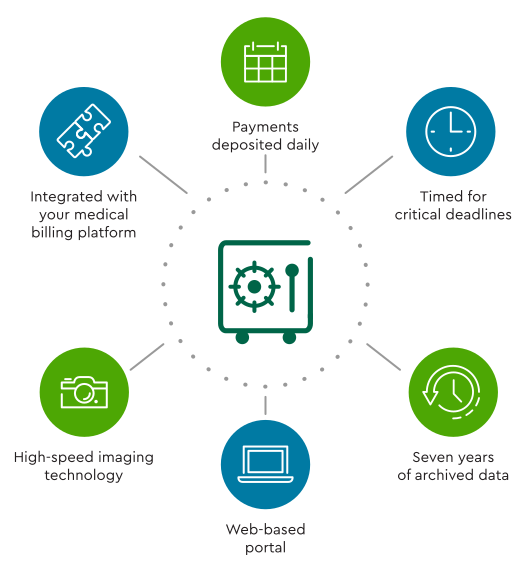
Figure 1 Text-Friendly Version PDF opens in a new window[PDF]
The process itself is streamlined, consistent and reliable (Figure 2):

Figure 2 Text-Friendly Version PDF opens in a new window[PDF]
Collect and deposit.
Incoming insurance and patient payments are collected through a centralized lockbox and deposited daily by the bank into the provider’s account, reducing the need for manual staff posting. An important feature is that lockbox deposits are timed to meet an organization’s critical check clearing deadlines.
Convert to digital.
Optical character recognition (OCR) technology rapidly converts paper payments and correspondence into machine-readable digital files.
Upload and post.
The relevant remittance information is sent through custom data files or directly through an API integration to the organization’s accounting system for automated posting and straight-through processing. Searchable, indexed document files are also integrated into the medical billing platform or image database.
Provide portal access.
CommerceHealthcare® offers an online portal with customizable workflows, expediting provider staff research, follow-up and item resolution that arises from payment issues such as out-of-balance check and remittance information, incorrect account numbers or missing invoice information.
The portal provides visibility into the claim-to-payment life cycle with seven years of archived data. Productivity is further enhanced through the ability to search by multiple criteria such as payer name, patient ID number, date of service and other EOB information.
The lockbox solution: The benefits.
Substantial benefits have been realized by providers who have implemented the lockbox approach described in this report:
- Productivity gains and cost savings through reduction in paper processing and manual workflows.
- Improved cash flow by speeding up payment processing, potentially accelerating access to funds by several days.
- Strengthened security and compliance, including robust audit tracking capability and safeguards designed to support HIPAA requirements for handling protected health information (PHI).
- Reduced risk of payment posting errors.
- Simplified balancing through electronic reconciliation reports.
- Scalability to manage increased volumes associated with merger and acquisition activity, expansion into outpatient services and other growth initiatives.
Today’s lockbox solutions are congruent with digital transformation strategies. They help produce electronic data that is valuable for analytics and emerging AI applications.
Stepping stone to broader remittance automation.
In many healthcare organizations, remittance management is performed with a complex amalgam of departments, workflows, payment types and data (Figure 3). That makes the process prone to inefficiencies and errors. The power of lockbox automation can be extended by adopting a comprehensive remittance and payment platform designed to alleviate these costly problems.
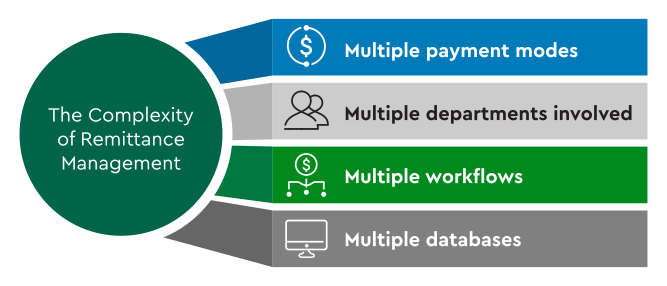
Figure 3 Text-Friendly Version PDF opens in a new window[PDF]
That is where solutions such as RemitConnect® from CommerceHealthcare® enter the picture. It offers health systems, hospitals and practices a unified system that automates processing — not just of paper-based remittances, but electronic remittance advices and electronic funds transfers as well. Integrated with patient financial and document management systems, the technology aims to generate efficient, paperless workflows through multiple functions that include the following:
- Automatic payment posting.
- Unbundling aggregated remittances sent by payers and directing each to the appropriate financial system.
- Robust correspondence imaging and indexing.
- Conversion of EOBs to digital 835 posting format files.
Enhanced bank services.
Working with a bank that has deep healthcare experience can provide additional opportunities to optimize receivables. One avenue is through proactive advice and implementation. As an example, CommerceHealthcare® helped a major health system rationalize a lockbox structure that had become increasingly complex through expansion. The system was maintaining 47 lockboxes with 47 associated accounts. The bank was able to consolidate the structure to seven lockboxes, matching the organization’s tax identifications.
Another opportunity is enhancing receivables strategy by wrapping a bank’s merchant and treasury services around the automation solutions. Cash management tools, virtual credit card opt-out assistance, and others help create an integrated receivables environment.
Conclusion.
Electronic lockbox services can be a practical step toward broader receivables automation. The manifold benefits can be quickly generated, and the services prepare the groundwork for further remittance automation. The functionality described in this report should help decision makers optimize their lockbox selection, whether they are adding the solution or replacing one that is underperforming.
CommerceHealthcare® solutions are provided by Commerce Bank.
[1]M. DeFreitas, “CommonSpirit's Earnings Send a Clear Warning to CFOs,” HealthLeaders, May 27, 2026.
[2]CAQH, 2025 CAQH Index Report, February 2026.
[3]McKinsey & Company, “Healthcare Revenue Cycle Management at a Strategic Turning Point: Survey Insights,” April 2026.
[4]CAQH, 2025 CAQH Index Report, February 2026.
[5]J.P. Morgan, Trends in Healthcare Payments, May 2025.
[6]Medical Group Management Association, 2026 Regulatory Burden Report, April 2026.
[7] The Federal Reserve Financial Services, 2025 Findings from the Diary of Consumer Payment Choice, May 2025.
[8]Market Intelo, Lockbox Services Market Research Report 2034, June 2026.