
Healthcare M&A integration: Rationalizing remittance management.
Key takeaways:
- Healthcare mergers and acquisition (M&A) activity continues to accelerate, increasing the importance of effective operational integration.
- Remittance management plays an important role in maintaining financial visibility and continuity during integration.
- Standardizing remittance processes can help improve efficiency, reduce complexity and support broader organizational goals.
- Organizations that address remittance management early in the integration process may be better positioned to support cash flow visibility and long-term operational performance.
Healthcare mergers and acquisitions are often driven by goals such as expanding clinical services, extending geographic reach and creating new growth opportunities. Health systems were involved in 32 transactions during the first half of 2026, representing a 23% increase year over year.footnote [1] As organizations pursue stronger care coordination, expanded capabilities and greater scale, success depends on more than completing the transaction. It also depends on how effectively operations come together after the deal closes.
Post-acquisition efforts often focus on clinical systems, organizational structures and patient experience initiatives. Financial operations, however, play an equally important role in long-term success. Among the many functions that must be aligned, remittance management can influence visibility, efficiency and financial continuity as healthcare organizations bring operations together.
The operational realities of integration.
Healthcare integrations rarely involve organizations that operate the same way. Acquired hospitals, physician groups and health systems often maintain different banking relationships, payer connections, remittance formats and revenue cycle workflows. As a result, integration teams frequently manage complexity across both legacy and newly acquired entities while continuing to support daily operations.
The challenge can become even greater when an acquired organization enters the transaction with existing operational or financial pressures. Revenue cycle teams may be asked to consolidate payment processes, reporting structures and banking relationships quickly while maintaining continuity and reducing disruption for staff and established workflows.
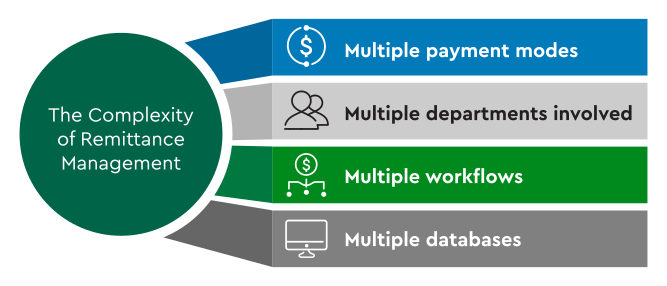
Figure 1
View PDF of Figure 1 opens in a new window[PDF]
Why remittance visibility matters.
Remittance data provides detailed information about payments, adjustments and reimbursement activity. During periods of organizational change, that visibility becomes increasingly valuable because it helps revenue cycle leaders monitor financial performance across multiple facilities, locations and systems.
Without a centralized approach to remittance management, organizations may experience fragmented visibility into payment activity, inconsistent reporting processes and increased manual effort to access remittance information. They may also face challenges identifying reimbursement trends across entities and encounter additional complexity when bringing newly acquired organizations into existing workflows and reporting structures.
Visibility into remittance activity can be especially important when healthcare organizations are focused on maintaining revenue performance during integration. Industry research indicates that fewer than 10% of healthcare revenue cycle leaders report being very confident their organizations effectively capture all revenue to which they are entitled.footnote [2] Integration-related complexity can increase the risk of delayed insights, missed opportunities and operational inefficiencies across the revenue cycle.
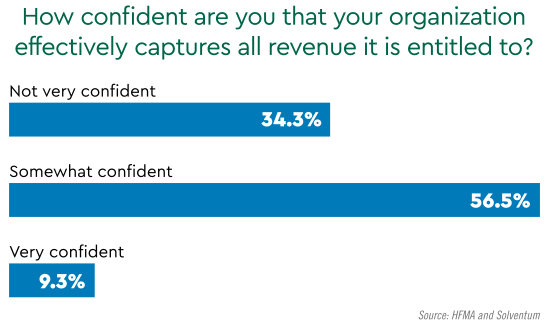
Figure 2
View PDF of Figure 2 opens in a new window[PDF]
A centralized remittance management strategy can create a more unified view of payment activity, helping leaders monitor trends, identify potential issues and support decision-making throughout the integration process.
Beyond payment posting.
Remittance integration is often viewed through the lens of revenue cycle operations. In practice, it can also support broader organizational objectives. Many healthcare organizations are working toward greater “systemness” across the enterprise. Systemness refers to aligning people, processes and information, so an organization operates as a cohesive system rather than a collection of independent facilities. Following a merger or acquisition, consistency across the enterprise becomes increasingly important. Standardized remittance workflows can support these efforts by establishing common processes, improving visibility and reducing operational variation across legacy and newly acquired entities.
Healthcare organizations also continue to face growing pressure to improve financial performance and operational efficiency. Industry data shows healthcare providers have experienced a 45% increase in cost to collect during the past two years.footnote [3] That trend highlights the importance of streamlining workflows and reducing resource-intensive manual processes.
By centralizing remittance management and standardizing payment-related activities, organizations may improve efficiency while supporting broader integration objectives. When teams spend less time retrieving, organizing and reconciling remittance information manually, they can devote more attention to strategic integration initiatives and process improvement efforts.
Supporting long-term success.
Successful healthcare M&A requires organizations to balance immediate operational demands with long-term strategic objectives. While clinical and organizational integration often receive significant attention, financial operations remain an important contributor to overall performance.
Remittance management may not be the most visible component of an integration strategy, but it can influence financial visibility, team productivity and process consistency across the enterprise.
Organizations that address remittance management early in the integration process can establish a stronger operational foundation that supports growth, efficiency and long-term success.
How CommerceHealthcare® can help.
As healthcare organizations navigate acquisitions and integration initiatives, CommerceHealthcare® RemitConnect® helps simplify the management of remittance information across multiple revenue systems and payment channels.
RemitConnect® supports the collection and organization of remittance information from electronic remittance advice (ERAs), ACH payments, lockbox services and paper remittance documents, helping bring payment-related information into a more centralized view. With easier access to remittance data, organizations can support standardized workflows, increase visibility into payment activity and streamline reconciliation processes.
CommerceHealthcare® solutions are provided by Commerce Bank.
Disclosures:
[1]KPMG, “M&A Trends in Healthcare,” September 8, 2026.
[2]Healthcare Financial Management Association, “Automation and AI in Revenue Cycle Research,” May 2025.
[3]McKinsey & Company, “Healthcare Revenue Cycle Management at a Strategic Turning Point: Survey Insights,” April 2026.
To view or print a PDF file, Adobe® Reader® 9.5 or above is recommended. Download the latest version adobe link opens in a new window.