
Solution Perspective: Improving efficiency through the payment cycle review process.
Key takeaways:
- Payment cycle reviews reveal process gaps by mapping workflows, analyzing data, and identifying inefficiencies that limit RCM performance.
- Benchmarking and workflow analysis drive actionable insights through onsite observation, comparative metrics, and clear recommendations tied to measurable improvement opportunities.
- A PCR provides a fast path to efficiency gains, offering personalized analysis, ROI-focused findings, and long-term guidance without disrupting daily operations.
Healthcare organizations remain heavily focused on driving operational efficiencies to address today’s financial pressures. Nearly four in 10 health system leaders recently cited automation and efficiency investments as their chief strategy to counteract burnout, staff shortages and financial challenges.footnote [1] Three-quarters of executives rank reducing operating costs as the top priority over the next five years.footnote [2]
This search for savings is leading many CFOs to increase scrutiny of their finance and revenue cycle management (RCM) processes. Inefficient workflows, manual steps and siloed data are still prevalent across the payments spectrum. Identifying and understanding process issues is widely viewed as a precondition to successful technology adoption. For example, emerging best practice guidance regarding deployment of artificial intelligence–based agents asserts that “reinventing a process around agents means more than layering automation on top of existing workflows — it involves rearchitecting the entire task flow.”footnote [3]
This Solution Perspective describes an approach from CommerceHealthcare® that helps finance leaders quickly assess their payments workflows and unlock actionable insights. Key questions about this solution are addressed to provide an overview of its aims, process, output and benefits.
What is a payment cycle review?
A payment cycle review (PCR), a long-standing component of the CommerceHealthcare® services portfolio, is a pragmatic and focused short-term consulting engagement. It evaluates a particular payments process or set of processes in payables, receivables or cash management. The aim is to delineate process steps, analyze internal information, identify opportunities for improvement, and recommend specific changes.
A PCR is an onsite discovery. Healthcare organizations collaborate with the consultant to permit direct workflow observation and provide access to key internal information. This approach enables focus on the organization’s particular situation rather than following a “cookie cutter” study.
Who is a PCR for?
The PCR process can be adapted to meet the needs of both transaction-heavy organizations plus those with smaller operations. Though differing in scale, both often experience similar degrees of complexity and inefficiency in their payments processes. PCRs are also versatile. They can assess the effectiveness of existing payments solutions or inform decisions about investing in new ones.
What insights does a PCR seek?
The PCR looks to identify and assess several areas:
- What is working in the payments cycle and what is not.
- Gaps occurring between actual operations and expected outcomes. Disconnects frequently emerge when current data is analyzed, revealing that organizational measures and standards may be based on outdated information.
- Comparative performance against two yardsticks:
- The process or policies of other similar organizations.
- Independent, respected data and benchmarks from sources such as the Association for Financial Professionals, IBIS World and others.
What is the PCR process?
A PCR represents a disciplined process. Key elements of the methodology include the following:
- Generally conducted over a half day, with some engagements requiring a full day.
- CommerceHealthcare® analysts meet onsite with representatives of the organization. The objective is to review key issues and identify pain points.
- The actual process workflows are observed, with questions asked for full understanding.
- The analysts gather relevant historical and current data.
- Following the onsite visit, analysis and report preparation occur. Follow-up questions may be asked. Report completion takes approximately three to four weeks.
- The report findings are discussed with the client.
While some organizations have the impression that a PCR-type analysis is too time-consuming, the reality is that it can typically be accomplished in a short time frame. CommerceHealthcare® aims for a streamlined effort that minimizes disruption to operations.
What are the outputs and deliverables?
The findings presentation contains several elements. Key observations are summarized, as in the example in Figure 1. This summary is usually accompanied by visual diagrams of both the existing and the recommended workflows.
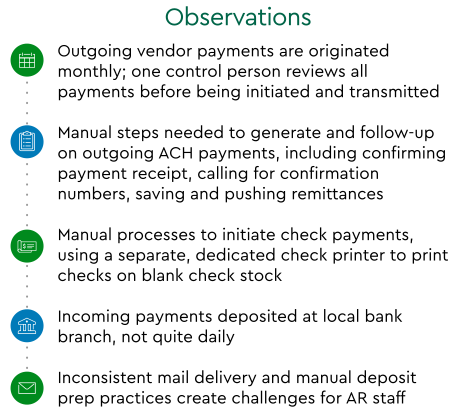
Figure 1
View PDF of Figure 1 opens in a new windowPDF
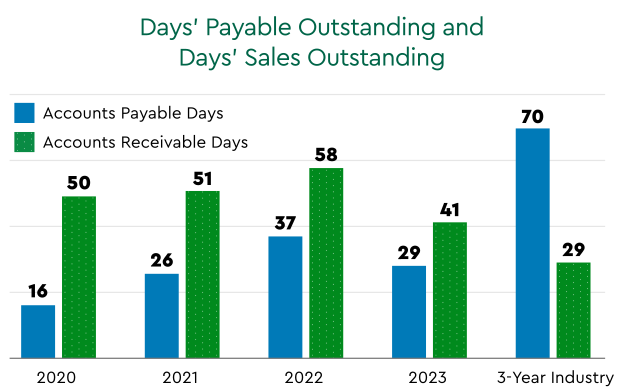
Results of CommerceHealthcare® data analysis and benchmark comparisons are frequently displayed graphically, as in a cash flow opportunity assessment example (Figure 2).
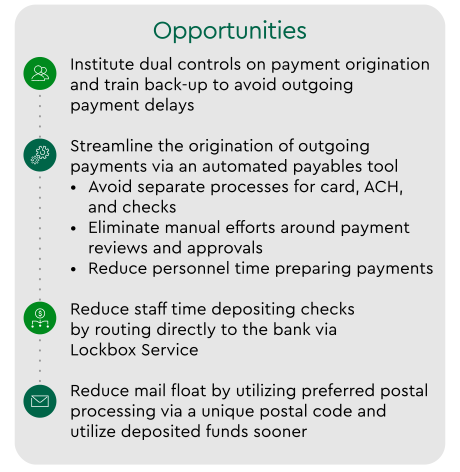
Specific actionable recommendations are likewise summarized and fully detailed in the report. Recommendations usually combine workflow changes with opportunities to enhance results through technology deployment (Figure 3).
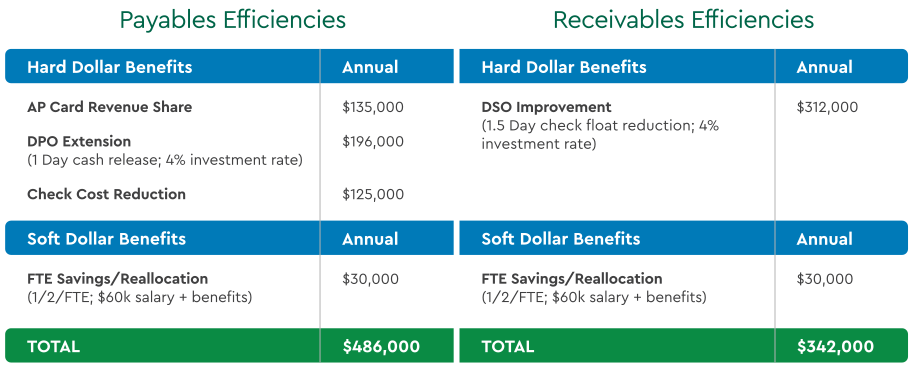
Given today’s heightened attention to return on investment, the PCR summary presentation also often includes quantification of direct and indirect benefits to be obtained by key recommendations, based on the organization’s data and assumptions (Figure 4).
What are the benefits?
Beyond the cost savings and productivity gains identified, multiple benefits flow to organizations that complete the PCR process:
- Independent, personalized analysis.
- Input from finance professionals with healthcare experience and a record of engagement with diverse organizations.
- Comparative views with similar organizations and industry norms.
- Longer-term perspective on process improvement opportunities, not just short-term solutions.
- Development of a trusted advisory relationship.
Conclusion.
A payment cycle review offers a clear, convenient path to uncovering attainable operational improvements in the cash management cycle. In an environment of increasing financial pressure and operational complexity, it provides a structured, efficient way to identify meaningful improvement opportunities.
CommerceHealthcare® solutions are provided by Commerce Bank.
Disclosures: